Shen Yun Performing Arts
  • De voorstelling
    Is Shen Yun nieuw voor u?
    9 eigenschappen van Shen Yun
    Klassieke Chinese dans
    Symfonie Orkest
  • Het gezelschap
    Ons verhaal
    Het leven bij Shen Yun
    Het onvertelde verhaal van Shen Yun
    De uitdagingen waar we mee te maken hebben
    Shen Yun feiten
  • Artiesten
  • Video's
  • Nieuws
    Wat is nieuw
    Nieuws
    Blog
    In de media
  • Recensies
  • Vragen en Antwoorden
  • Pers Nieuwsbrief Ontdek Neem contact met ons op Zoek
    Nederlands
  • English
  • 中文正體
  • 中文简体
  • 日本語
  • 한국어
  • Česky
  • Deutsch
  • Español
  • Français
  • Indonesia
  • Italiano
  • Polski
  • Português
  • Latviski
  • Pусский
  • Română
  • Svenska
  • Việt
  • Melayu
  • עברית
  • Norsk
  • Kaarten & Info
    Menu
    Shen Yun Logo
    Kaarten
    Wat is nieuw
    Menu
    • De voorstelling
      • Is Shen Yun nieuw voor u? 9 eigenschappen van Shen Yun Klassieke Chinese dans Symfonie Orkest
    • Het gezelschap
      • Ons verhaal Het leven bij Shen Yun Het onvertelde verhaal van Shen Yun De uitdagingen waar we mee te maken hebben Shen Yun feiten
    • Artiesten
    • Video's
    • Nieuws
      • Wat is nieuw Nieuws Blog In de media
    • Recensies
    • Vragen en Antwoorden
    Shen Yun 9 Characteristics Link Image

    Wat maakt ons uniek?

    ONTDEK DE 9 EIGENSCHAPPEN
    • Pers
    • Nieuwsbrief
    • Ontdek
    • Neem contact met ons op
    • Zoek
    Taal
    • English
    • 中文正體
    • 中文简体
    • 日本語
    • 한국어
    • Česky
    • Deutsch
    • Español
    • Français
    • Indonesia
    • Italiano
    • Polski
    • Português
    • Latviski
    • Pусский
    • Română
    • Svenska
    • Việt
    • Melayu
    • עברית
    • Norsk
      Nieuws
      Terug Nieuws > Is Shen Yun a Cult?

    Is Shen Yun a Cult?

    A message from our artists

    No, but it’s a fair question given what you may have seen online.

    While every year, a million people join us in theaters, we know that many had searched Shen Yun online beforehand and found alarming accusations. As Shen Yun performers and staff, we want to directly tell you who we are, what we believe, and what life here is like, so you can make your own decision.

    Where is the “cult” label from?

    Shen Yun was started by practitioners of the meditation discipline Falun Gong. The Chinese Communist Party (CCP) has been persecuting Falun Gong practitioners in China for more than 26 years. To justify its ongoing atrocities, it worked hard to label us an “evil cult.”

    Shen Yun began in New York’s Hudson Valley in 2006, when a small group of elite artists came together with a shared mission. A big part of our story is that many of us escaped China after the communist regime began suppressing Falun Gong.

    Falun Gong (also called Falun Dafa) is a spiritual practice in the Buddhist tradition. It includes meditation exercises and revolves around the principles of truthfulness, compassion, and forbearance. In the late ‘90s in China, the government there estimated there were 70-100 million people practicing it—more than the members of the Chinese Communist Party (CCP) itself. Facing such a large, albeit peaceful, group with its own ideology, the regime came after Falun Gong with full force in 1999.

    Overnight, tens of millions of Chinese were labeled enemy of the state. Hundreds of thousands were sent to prisons and labor camps, many of them tortured, and killed. The entire state-run propaganda machine was blasting character-assassination attacks on Falun Gong around the clock, trying to turn an entire nation against fellow citizens.

    An international label

    Outside of China, the Chinese regime struggled to justify its oppression on common, peaceful people. That is when an American PR firm suggested it tap into the cult narrative so many people in the West knew and feared. That was the way the “cult” label was slapped on Falun Gong—by the CCP and its representatives.

    Independent scholars and experts who studied Falun Gong have concluded that we do not fit the definitions of a cult. Journalist Ian Johnson, who spent years reporting on Falun Gong in China and won a Pulitzer Prize for his daring coverage, observed that “its members marry outside the group, have outside friends, hold normal jobs, do not live isolated from society, do not believe that the world’s end is imminent and do not give significant amounts of money to the organization. Most importantly, suicide is not accepted, nor is physical violence.” Johnson described it as “at heart an apolitical, inward-oriented discipline.”

    We have no membership rolls, no fees, no clergy, no initiation rituals, and no acts of worship. If you listen in on our daily conversations about the practice, they’re mostly about mundane-sounding things like taking ownership for our actions, improving our moral character, and being more considerate of others.

    Humble beginnings


    When the persecution began in China, some of us made the difficult decision to leave our homes in China and flee to other countries. Others were Falun Gong practitioners already practicing freely in the United States, Canada, Australia, Taiwan, or a hundred other countries. We saw the brutality of what was happening to people like us in China and didn’t really know what we could do to try to stop it.

    We handed out flyers. We net with our Congress and Parliament representatives, held sit-ins outside Chinese embassies, and wrote letters to the editor of newspapers. Later, some of us started websites and media companies to expose the persecution and tell the world what was happening in China.

    Some of us were artists. Falun Gong practitioners who escaped China came from all walks of life—among them were accomplished dancers, musicians in top orchestras, painters, and others. What could they do?

    They began putting together performances and galas to both tell the story of what is happening in China today and celebrate the beauty of traditional Chinese culture before communism. After a few years of doing that, they came together in New York and created Shen Yun.

    From modest beginnings, Shen Yun has grown into eight full-sized touring companies, each with its own orchestra, dance troupe, and production crew, performing in the world’s most venerated theaters every year.


    A Shen Yun performance includes roughly 20 dance numbers, mostly classical Chinese dance, stories, and legends from ancient China. And every year, among those we typically have two dances about what is taking place in China today—the brutality of the persecution and the courage of the resistance to it. It is a small part of the show, but one that many audience members say is the most memorable and inspiring.


    How are young performers treated at Shen Yun?

    You may have seen claims online that Shen Yun uses “child labor” or “takes advantage of young people for profit.” This is one of the most serious accusations we’ve encountered, so let’s look at it.

    When you see our performances, onstage you see a mix of adult performers and talented young artists. Across the company, over 85% of our touring members are adults, and less than 15% are teens.

    These are students of Fei Tian Academy of the Arts performing on a New York State-approved practicum. The practicum program allows them to get hands-on experience with live performances and be mentored by some of the world’s best dancers and musicians, not to mention see more of the world by the time they graduate than most people will see in a lifetime. During this time, they remain students: the school oversees their credits and academic progress, they have supervisors, and must complete a standard academic curriculum before graduating.

    Now, it’s true these students aren’t paid a salary—but neither are NCAA athletes or students in similar ballet programs. They do receive a small monthly stipend for expenses and are on a full scholarship worth around $50,000 a year. When they graduate Fei Tian Academy of the Arts and Fei Tian College, they regularly place directly into the company as salaried professional dancers with both world-experience and zero student debt.

    A young person’s game

    Classical Chinese dance itself is, by its nature, a young person’s art. Its athletic standards for flexibility and explosive tumbling and flipping techniques are extremely high, comparable in many ways to gymnastics or other elite sports. As in those fields, serious training begins young, and the peak performance years are often in the late teens and early twenties.

    This kind of training and career isn’t for everyone—we get that. It’s possible some people here didn’t have a good time and decided to leave. Others might not have reached the standard needed to continue and are bitter about all the effort they had put in. Yet others we know left on bad terms after breaking school or company policies and are still upset.

    Our environment is informed by our Falun Dafa faith. This includes conservative approaches to interactions between males and females, limitations on access to smartphones and social media for young people, daily study and meditation. That’s also not for everyone, and that’s perfectly fine. People can come and go as they please.

    Many of us who are here grew up watching Shen Yun and dreamed of joining the company from a young age. Some of us tested over and over again until we finally got into Fei Tian. That doesn’t mean becoming an elite dancer, or classical musician, for that matter, is easy. It is hard work and requires sacrifice and dedication. It asks a great deal of our bodies, our time, and our willpower. But it’s not abusive.

    To portray this dedication as “abuse” is a major distortion of the hard work we freely choose to put into honing our craft and sharing something meaningful with audiences around the world. We actually work toward these goals together and most of us would describe the environment here as very supportive and collaborative. Our teachers often perform, train, and meditate with us side-by-side; we have no diva culture.

    We certainly don’t have the kind of abuse you see in movies about gymnasts in China or the former Soviet Union. That’s not at all what’s going on here. At most you could accuse us of working a little too hard.

    Why such negative reporting?

    One reason is the CCP’s long-running campaign against us. For more than two decades, Chinese state media, including in English and other languages, have called us a cult (an “anti-humanity, anti-society, anti-science evil cult organization,” if we were to be exact). They have tried to get these narratives into the mainstream through social media influencers and, frankly, have rather succeeded the last few years.

    A second reason is that some early Western reporting on Falun Gong repeated Chinese state talking points without fully examining their source or accuracy. Once a major outlet frames a group in a certain way, that label tends to echo: other writers, blogs, or online commentators pick it up and pass it along, often without direct experience.

    And finally, words like “cult” or “abuse” draw attention online. Articles using these terms—whether accurately or not—tend to travel farther than balanced explanations, so the most dramatic portrayals are often the ones people see first, and remember.

    Why What’s life at Shen Yun actually like?

    For us, Shen Yun is a professional workplace with yearly cycles of rehearsal, touring, and vacation. It’s also an environment that deeply values personal growth and mutual respect.

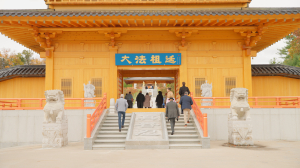
    We spend most of the year at our headquarters in New York. We are on a campus called Dragon Springs, which is home to our HQ, the Fei Tian schools, and Buddhist Tang Dynasty-style architecture. We have over 400 acres of land, mostly forested hills, streams, and a lake with deer and other wildlife.

    Fei Tian Academy of the Arts and Fei Tian College are religious boarding schools and the students live in dorms on campus. Professional adults live in the towns nearby and commute to and from work daily.

    We have multiple full-size dance studios, several rehearsal theaters, a concert hall, and a tumbling gymnasium with trampolines and foam pits. We also have a cafeteria, bakery café, pool and ping pong tables, basketball tournaments, movie nights, Sunday concerts, as well as feasts and celebrations for Thanksgiving, Christmas, Chinese New Year, and the Moon Festival (not to mention consuming literally thousands of moon cakes).

    In late December we leave for our global tour. Touring season typically lasts about four and a half months. Some days are long and tiring, going from setup to rehearsal to performance and, a few times a year, even a load-out at the end. Other days might be an afternoon-only show with an evening off, an evening-only show with much of the day off, an intense two-show day, or perhaps an off day with BBQ on the beach or a travel day with sightseeing. At this point, we have likely visited every major mall and Korean BBQ in America.

    The schedule can be demanding at times, and we miss loved ones back home when we’re on tour. Some of us miss our family back in China that we haven’t seen in years; we know we can’t go back to see them without endangering both them and ourselves.

    But for those of us who choose this life, combining highlevel artistry, spiritual growth, and the chance to share something good in a heart-to-heart connection with audiences around the world makes daily life at Shen Yun deeply fulfilling.


    Before saying goodbye

    We know that the mix of a different spirituality, foreign culture, and a human-rights story can feel complex. Our goal here is not to dismiss concerns, but to acknowledge them and offer clarity about who we truly are. We’re not perfect. But we can honestly say we’re trying our best.

    And one more thing—in our shows, we’re not trying to convert anyone. People of all faiths and non-faiths comes to see Shen Yun, and we respect that. If people see the show and want to check out Falun Dafa, great. But our purpose is to both share the beauty of a traditional culture and tell a story that’s close to our hearts. Over 90 of our performers have been directly affected by the persecution in China: mothers imprisoned, fathers killed, or they themselves were jailed for their beliefs.

    The last couple years have taught us we need to open up more and let people get to know us and see who we really are. We’ve done podcast interviews, filmed raw behind-the-scenes footage, and allowed unprecedented access to our campus to outside camera crews.

    If you still have questions, we understand. We invite you to learn more—and, if you choose, to experience our performance firsthand. The best understanding often comes not from online caricatures, but from seeing the artistry, sincerity, and human connection live on stage. More than anything, we thank you for keeping an open mind and truly wish you the best.


    Other questions you may be interested in:


    Are Shen Yun performers denied medical care?

    Absolutely not. Our dancers receive medical treatment if injured, including surgery and physical therapy. A physician comes to our training center at least once a week. Doctors who have regularly treated Shen Yun performers have publicly stated that such claims are “ridiculous” and “insulting.” Our dancers have also discussed their injury experiences and how the company helped arrange treatment and was very supportive throughout their recovery.

    Why do you have so much security?

    We have security at our headquarters in New York because we are constantly being threatened and attacked. Over the last few years we have received over 200 death threats, sometimes on a daily basis. These emails threaten to bomb and mass shoot us, burn our buildings, rape our female dancers, and throw our kids from the rooftops. We’ve already experienced tire slashings, cutting of our security camera wires, nails strewn on our entry roads, and multiple incidents of vandalism and trespass by unknown individuals. Early on, the Chinese consulate drove right up to our gate. More recently, two CCP agents were arrested by the FBI for trying to sabotage us. Some of our students and staff have escaped persecution in China and still have family in China who are at risk or who have been threatened because their sons or daughters are in Shen Yun. One of our teachers had his home broken into and was beaten up by Asian men who only wanted his laptops. For us, even in America, the persecution and these threats are very real.

    That having been said, our campus is actually a lot more porous than you might imagine. Not only do employees commute to and from work daily, we also receive many visitors—parents dropping off or picking up their children from school, Amazon delivery trucks, guest teachers, as well as state and county inspectors.

    We would rather not need this security. We would prefer that you and everyone else could come visit us at Dragon Springs, see the beauty of the Tang Dynasty architecture, and enjoy a performance in our stunning Shen Yun Theater. We hope someday soon you will be able to.

    Why does Shen Yun have such a large cash reserve?

    Shen Yun’s annual revenue is comparable to other performing arts institutions, such as American Ballet Theatre and is much less than New York City Ballet. With eight troupes touring the world simultaneously and a brand-new production every year, ours is a large-scale operation. Expenses include salaries for dancers, musicians, technical crew, artistic teams, and administrative staff; training facilities and rehearsal theater; props, costumes, audio, video, and lighting gear; advertising and marketing; buses and trucks; food and medical services; hotels; and flights for hundreds of performers.

    Moreover, our management wants to be ready for any eventuality in an uncertain world. During COVID, for example, while many performing arts companies laid off their employees, Shen Yun was able to keep paying the artists’ and staff’s salaries even while not performing for a year and a half.

    More resources to explore

    More from our artists:
    www.shenyun.org/tag/name/t/Artist-Spotlight

    Artist podcast interviews:
    www.youtube.com/playlist?list=PLQUHSc7AD4GuJ9gcUnvhRGSJjmxDsaVNo

    Meet the artists: www.shenyunperformingarts.org/artists

    Challenges we face: www.shenyunperformingarts.org/challenges-we-face

    About Fei Tian College: www.feitian.edu

    More about Fei Tian Academy of the Arts: www.feitianacademy.org

    More about the CCP’s latest campaign against us: www.faluninfo.net/launching-a-knockout-punch-ccp-campaign-to-sabotage-shen-yun-falun-gong

    More about Falun Gong: www.faluninfo.net/what-is-falun-gong-falun-dafa

    More about the persecution in China: www.faluninfo.net/violent-suppression-of-100-million-people

    Vorige

    Q&A With Angelia and Piotr

    Volgende

    Visit to Junction Bridge
    Meest recent
    • Artiest in de schijnwerpers: Michelle Lian
      MichelleLian Header En Thumb 650w
    • Wanneer de maan het helderst is: Shen Yun viert Midherfstfestival
      Moon Festival Painting
    • Shen Yun-artiesten nemen deel aan parade om de vervolging te stoppen
      THUMB EpochImages 1224016146 SYJoinsDafaParade
    • Wanneer vervolging dichtbij komt
      720 Header Cn 650x400ratio
    • Lincoln Center publiek over Shen Yun: 'Perfectie'
      Frank Dellapolla 650x400
    • Amerikaanse toeschouwers geïnspireerd door Shen Yun
      NY Audience Feedback 2024
    • Curtain Call: Een record brekende tournee
      SY Venue 1631x971
    • Het overwinnen van tegenspoed, van een bescheiden begin tot vandaag
      1 25 Parma NEWEDIT
    • Foto's van de tournee: Lentepracht
      DSC01294 2000x1336
    • Publieksleden uit Europa reageren op Shen Yun
      London Review
    Meest populair
    • Alle
    • Nieuws
    • Blog
  • 1 Artiest in de schijnwerpers: Michelle Lian
  • 2 Shen Yun viert 20-jarig jubileum met historische wereldtournee
  • Zie meer
  • 1 Artiest in de schijnwerpers: Michelle Lian
  • Zie meer
    Zie meer
    Shen Yun logo golden

    Shen Yun Performing Arts is een vooraanstaand klassiek Chinees dans - en muziekgezelschap dat is opgericht in New York. Het speelt klassieke Chinese dans, etnische en volksdans, en verhaal gebaseerde dans met orkestrale begeleiding en soloartiesten. Vijfduizend jaar lang floreerde de goddelijke cultuur in het land China. Door middel van adembenemende muziek en dans laat Shen Yun deze glorieuze cultuur herleven. Shen Yun, of 神韻, kan worden vertaald als: "De schoonheid van goddelijke wezens die dansen."

    Over Shen Yun
  • Is Shen Yun nieuw voor u?
  • Shen Yun Symfonie Orkest
  • Het leven bij Shen Yun
  • Shen Yun feiten
  • De uitdagingen waar we mee te maken hebben
  • Shen Yun & Spiritualiteit
  • Ontmoet de artiesten
  • Veelgestelde Vragen
  • Video's
  • Nieuws
  • Over Shen Yun
  • De artiesten
  • Recensies
  • In de media
  • Nieuws
  • wat is nieuw
  • Nieuws
  • blogs
  • In de media
  • Ontdek
  • Chinese Dans
  • Muziek
  • Zang
  • Shen Yun Kostuums
  • Digitale Projectie
  • Shen Yun Rekwisieten
  • Verhalen en Geschiedenis
  • Shen Yun en traditionele Chinese Cultuur
  • Communiceer met ons
    Volg ons op Gan Jing World
    Teken ons gastboek
    Lees meer over Shen Yun
    op ons streaming platform
    Beoordelingscentrum voor kunstvaardigheid
    Aandenken en premium collecties
    Geïnspireerd door Shen Yun
    Artist Fashion
    Shen Yun Performing Arts officiele website Copyright ©2026 Shen Yun Performing Arts. All Rights Reserved.
    Neem contact met ons op Voorwaarden Privacy Sitemap

    Op ShenYun.com. gebruiken we cookies. Door het gebruiken van deze site accepteert u onze Cookie Policy.